
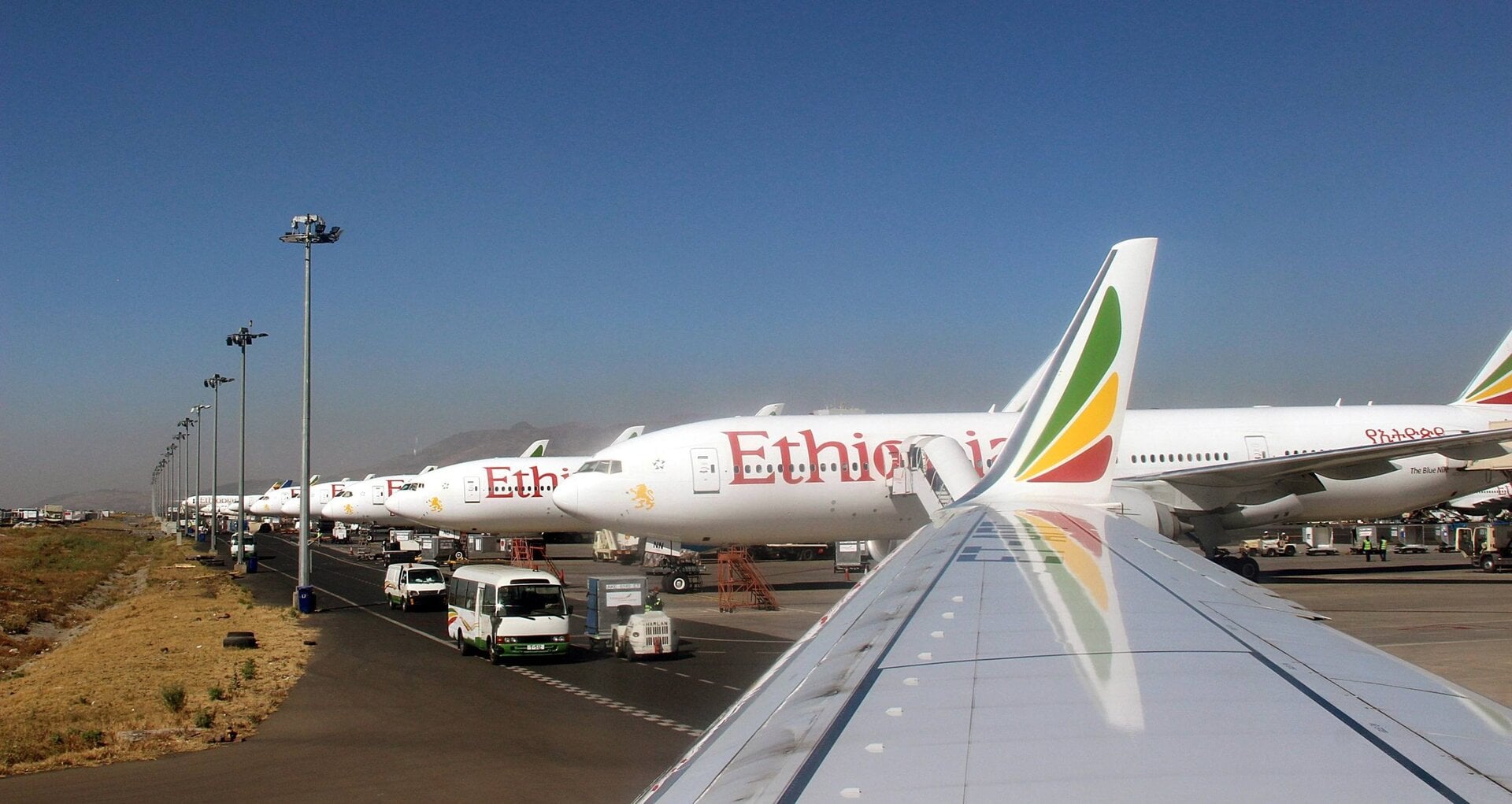
Ethiopia’s Finance Minister Ahmed Shide has announced $4.8bn is pledged towards a giant $12.5bn Bishoftu International Airport to be built near Abusera, 40 km South of Addis Ababa. It will be Africa’s largest airport and reinforce Ethiopian Airlines leading position in passengers and cargo across and into the continent.
There was intense interest in the project on 26-29 November at special presentations during the 8th Africa Investment Forum in Rabat from development partners, commercial lenders, export-credit agencies, and institutional investors from across Africa, Europe, North America, and Asia.
Government-owned Ethiopian Airlines has pledged to invest $3.2bn into the equity of the new airport.
The African Development Bank (AfDB) has pledged $500m of debt and the Bishoftu Airport is set to be its second-largest infrastructure investment, a rail corridor in West Africa is the biggest. AfDB is also initial mandated lead arranger, global coordinator and bookrunner to raise $8bn in debt finance for the airport. Ethiopian Airlines Group Chief Commercial Officer Lemma Yadecha and the former President of the African Development Bank Group Akinwumi Adesina signed an appointment agreement with Ethiopian Airlines on 11 August in the presence of Ethiopia’s Minister of Finance, Ahmed Shide.
A unnamed Chinese bank is reported to have pledged $500m as part of the $4.8bn.
Innovative financing
The finance will include securitization where future revenue streams, from passenger fees to cargo handling, will be packaged as investable securities. Addis Fortune reports that Minister Ahmed said blended finance structures will allow concessional capital to “de-risk” private investors, while guarantees from the AfDB and other multilaterals will lower borrowing costs.
Ethiopian Airlines Group executives also pitched the project to European investors in Paris on 3 November, according to Ecofin agency. CEO Mesfin Tasew Bekele told Ecofin news: “We generate 90% of our revenue in foreign currency… outside Ethiopia. So the impact of the currency exchange rate change doesn’t affect us so much.”
When does work begin?
The new airport is set to be Africa’s largest airport and a major logistics and cargo hub, boosting trade and activity across Africa and globally. An article on Fana newsagency says Phase I is valued at approximately $12.5bn and is designed to accommodate 60m passengers a year, with full development projected to raise total capacity to 110m passengers “positioning BIA as Africa’s largest airport. The project also incorporates extensive cargo facilities and an airport-city development featuring logistics centres, hospitality, retail, and direct rail and expressway connections to the capital.” An AfDB press release from August says the airport will handle 3.73m tons of cargo a year.
In August the bank announced “Groundworks are expected to begin late 2025, with Phase I expected to be completed by November 2029. The multi-billion-dollar project will include an airport city with facilities such as shopping malls, hotels, recreation areas, as well as direct rail and expressway links to Addis Ababa.” However, the recent article by Fana says “Ethiopian Airlines Group formally released the Project Information Memorandum and financial model to potential financiers, while prequalification of EPC contractors is underway, with bid submissions expected by mid-December 2025.” The Economist magazine notes that discussions are underway with 15,000 people who are likely to be displaced and the AfDB says Ethiopian Airlines has allocated $350m for livelihood restoration and resettlement of communities that will be affected by the construction.
According to Addis Fortune, Bole Airport is getting near to capacity after a decade of double digit annual passenger growth. It will serve domestic customers when the new airport is complete. Bishoftu offers size and expansion potential and is near to critical road and rail corridors including ongoing regional infrastructure such as the Djibouti-Addis rail and cross-border expressways.
AfDB praise to Ethiopian Airlines
Adesina said “Speed and scale are now the hallmarks of Ethiopia. And scale is what we are signing onto today – a testament to the power of vision, determination and resolve to put Africa at the top… Ethiopian Airlines is Africa’s oldest and best airline. It is critical for regional economic integration, connecting capitals, people and markets, with its globally rated cargo facilities.”
According to an AfDB press release: “Serving over 145 international destinations, Ethiopian Airlines Group, Africa’s largest and most successful airline with over 79 years of operations, views the new airport as a cornerstone of its Vision 2040 growth strategy. The project also aligns with the African Union’s Agenda 2063 and the African Single Air Transport Market, both of which promote enhanced continental integration and connectivity.” The letter of intent was signed on 24 March.
Ethiopian Airlines drives connectivity across Africa and with the rest of the world through an extensive hub-and-spoke network, with subregional hubs.
In the fiscal year ending 30 June 2025, the airline reported record revenues of $7.6 billion, according to this story on Addis Insight, added 13 new aircraft to its fleet and launched six new international destinations. The AFDB noted revenue is up 8% on the previous year and says the airline “transported 19.0 million passengers, with 15.1m on international routes and 3.9m within the country.”
Ethiopia reforms and links to neighbours
Minister Ahmed said the interest in the giant investment is also linked to a menu of liberal policy reforms, within a broader “homegrown reform agenda,” prioritising transparency, market liberalisation, and private sector participation.
Reforms include tariff reductions, customs harmonization and digital infrastructure upgrades, and alignment with protocols of the African Continental Free Trade Area (AfCFTA) and the Intergovernmental Authority on Development (IGAD) in Eastern Africa: “The hope is that by making Ethiopia more interoperable with its neighbours, the new airport will become not just a national asset, but a pan-African gateway.”
Commentary on the business case
The Economist website on 16 December noted that the planned 110m passengers a year is “more than travelled in 2024 through Atlanta, which has been the world’s busiest airport almost every year since 1999…
“The business case for a new airport is compelling. Most state-owned African airlines are badly managed and chronically lossmaking. ET, by contrast, has long been run by able professionals. In 2024 its passenger-carrying capacity was roughly equivalent to that of the second-, third- and fourth-largest African airlines combined. When flying from one African capital to another or onwards to Europe, it is often the cheapest option and sometimes the only one.”
The report notes that Bole airport has capacity of 22m passengers a year and ET expects to handle 66m by 2035. “Moreover, taking off at the capital’s altitude of 2,300 metres requires planes to be lighter. From Bishoftu, which lies around 400 metres lower, ET’s aircraft could carry either more cargo or more fuel, which would make it possible to offer direct flights to North America, for instance.
“Some reckon the airline can easily afford the steep price tag. ET has turned a profit every year for nearly two decades, even during the covid-19 pandemic. In the year to July its revenues grew by 8% to $7.6bn; over the previous year they grew by 15%. ‘Ethiopian Airlines is about as blue-chip as you can get if you’re looking at infrastructure in Africa,’ says Sean Mendis, an aviation consultant. In addition to the AfDB, both America and China have expressed interest in financing the airport.”
However, the magazine warns that civil strife or war with neighbour Eritrea could hamper the project and global competition is growing to ET’s dominance in Africa, including from Emirates, Qatar Airways and Turkish Airlines.
Africa Investment Forum unlocks investment capital
According to Addis Fortune, the three-day AIF in Rabat, Morocco, showcased 39 bankable projects in boardroom sessions and saw $15bn in deals announced with the Bishoftu Airport one of the biggest projects. It quoted Max Magor Ndiaye, AfDB’s senior director for Syndication & Client Solution: “The forum has become a place where you don’t just pitch an idea. You leave with transactions, term sheets, and timelines.”
According to the AIF press release, AfDB President Sidi Ould Tah announced the outcome at the close. He said investors responded strongly to the projects tabled in the boardrooms because they were supported by social and environmental impact studies and robust financial models. About two-thirds of the proposed transactions targeted the energy and transport sectors.
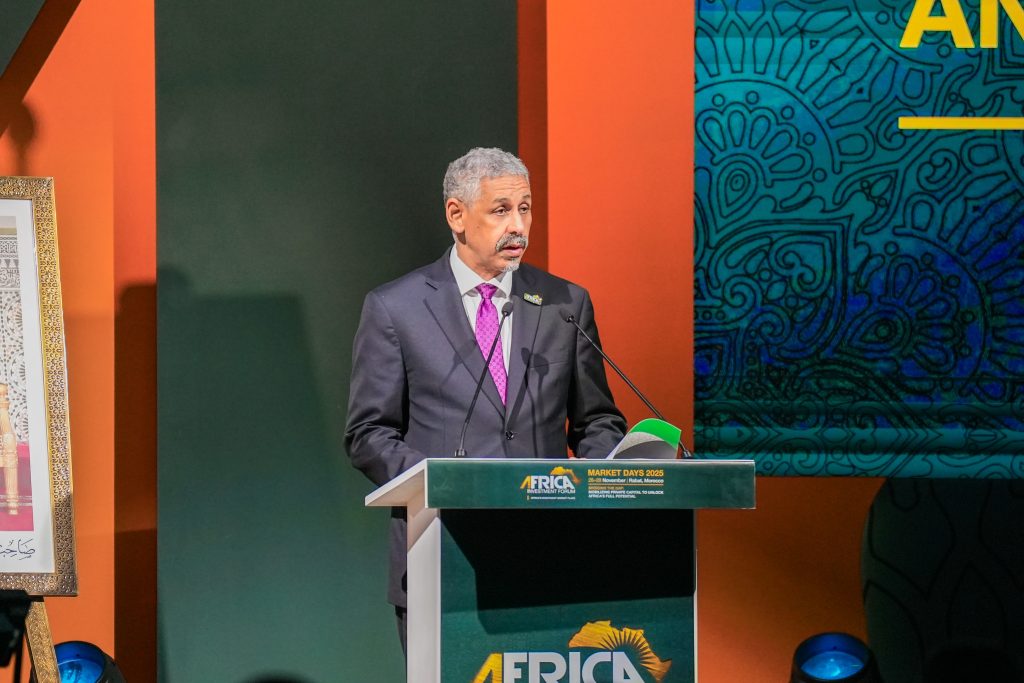
Photo AIF2025 – AfDB President Dr. Sidi Ould Tah at closing ceremony, photo supplied by AfDB.
The 2025 meeting this year’s edition drew financial backing from 32 global private-sector organisations, which is double the number of 2024. There were more than 2,000 delegates, representing private capital providers, international investment and commercial banks, multilateral development finance institutions, entrepreneurs and government representatives explored project structuring, mobilising capital and women’s access to finance. Also present were African sovereign wealth and pension funds, indicating plans to unlock domestic capital.
(Main photo: Ethiopian Airlines planes lined up on runway 2015, photo by TheoSid on Depositphotos).